Wired for Influence: China's Expanding Command Over the World's Digital Arteries
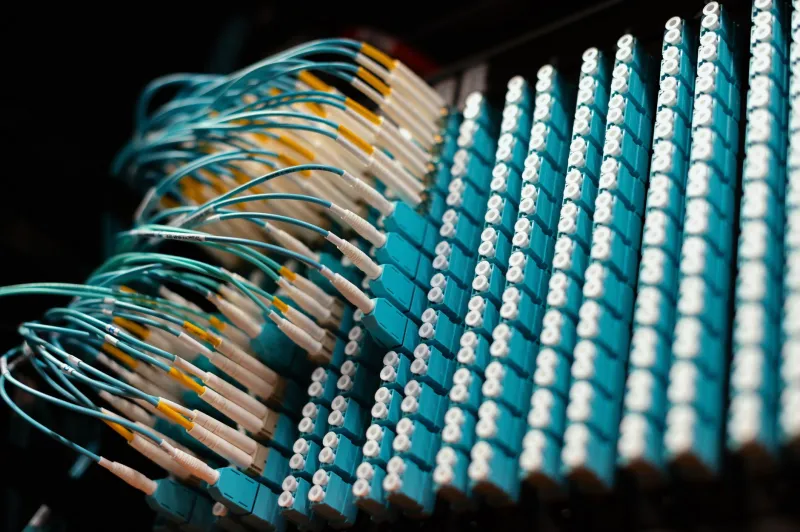
When most Americans think about competition with China, they picture container ships, semiconductor shortages, or military exercises in the South China Sea. Few consider the fiber-optic cable buried beneath the Pacific Ocean floor, the data center humming quietly on the outskirts of Nairobi, or the satellite network extending coverage to villages across Southeast Asia. Yet these are the instruments through which Beijing is methodically constructing a digital architecture that could, over time, fundamentally reshape how the world's information moves—and who controls it.
This is not a distant hypothetical. It is an ongoing, accelerating reality.
The Infrastructure Nobody Is Talking About
China's Digital Silk Road, formally launched as an extension of the broader Belt and Road Initiative in 2015, was initially dismissed in Western policy circles as an ambitious but logistically complicated development program. Nearly a decade later, Chinese technology firms—Huawei, ZTE, China Telecom, and a constellation of state-backed subsidiaries—have laid or financed thousands of miles of undersea cables, constructed data centers across Africa, Latin America, and Southeast Asia, and deployed telecommunications infrastructure in more than 100 countries.
Huawei alone now participates in roughly one-third of the world's submarine cable systems, according to analyses by the Atlantic Council and independent telecommunications researchers. These cables carry an estimated 95 percent of international internet traffic. The company also supplies 4G and 5G network equipment to dozens of nations that lack the financial leverage to demand alternatives—nations that, notably, sit at critical geographic and diplomatic crossroads.
To be clear, the mere presence of Chinese hardware in foreign networks does not constitute espionage. But the architecture of control that such presence enables—the ability to monitor, throttle, or redirect data flows—represents a form of structural leverage that intelligence professionals describe as deeply consequential, regardless of whether it is actively exploited at any given moment.
The Data Question
Beyond physical infrastructure lies a subtler but equally significant battleground: data itself. Chinese consumer applications—most prominently TikTok, owned by Beijing-based ByteDance—have become primary information conduits for hundreds of millions of people worldwide, including an estimated 170 million Americans. The platform's recommendation algorithm, whose governing logic remains opaque to outside auditors, determines what content surfaces and what disappears from users' feeds.
Congress has held hearings. Legislation has been debated and, in some cases, passed. Yet the fundamental question of whether an application engineered by a company operating under Chinese law—which compels cooperation with state intelligence agencies upon request—can be trusted to remain neutral in its curation of political and social content has not been definitively resolved.
This is not a hypothetical vulnerability. Researchers at universities including MIT and Stanford have documented measurable differences in how TikTok's algorithm handles politically sensitive content depending on geographic market. Content critical of the Chinese government, for instance, has been documented as receiving suppressed distribution in ways that do not appear to apply to comparable criticism of Western governments.
The implications extend beyond TikTok. Chinese firms have made significant investments in cloud computing infrastructure, artificial intelligence development platforms, and digital payment systems across the developing world. Each of these represents a node through which data aggregation—and, potentially, manipulation—becomes structurally possible.
The Developing World as Digital Proving Ground
Perhaps the most strategically significant and least reported dimension of this competition is unfolding not in Washington or Brussels, but in Accra, Lagos, Islamabad, and Jakarta. Across the Global South, Chinese technology companies have moved rapidly to fill infrastructure gaps that Western governments and private firms were slow to address.
Huawei's Smart City platforms, deployed in cities from Nairobi to Belgrade, integrate surveillance cameras, facial recognition systems, and centralized data management into municipal governance structures. Governments that adopt these systems gain genuine administrative capabilities—traffic management, crime monitoring, emergency response coordination. They also, in many cases, gain tools that can be repurposed for population surveillance in ways that align with governance models antithetical to democratic norms.
This matters to American interests in ways that are not always intuitive. Nations whose information infrastructure is Chinese-built are nations whose governments may have structural reasons—technical dependency, financial obligation, or political alignment—to favor Beijing's positions in international forums, to resist American diplomatic pressure, and to transmit information through channels that Chinese intelligence services are theoretically positioned to access.
Washington's Uneven Response
The U.S. government has not been entirely passive. The Federal Communications Commission has moved to restrict or revoke operating licenses for Chinese state telecommunications carriers on American soil. The CHIPS and Science Act, signed into law in 2022, directed billions toward domestic semiconductor manufacturing. The State Department's Clean Network initiative attempted to build a coalition of nations committed to excluding Chinese technology from sensitive infrastructure.
But these measures have been reactive, inconsistently implemented, and insufficiently funded relative to the scale of the challenge. American and allied private firms have struggled to offer developing nations competitive financing for telecommunications infrastructure—the Export-Import Bank's lending capacity remains constrained compared to the state-backed financing that Chinese firms routinely extend.
There is also an uncomfortable diplomatic reality: pressing allies and partners to exclude Chinese technology from their networks is a far easier conversation to have when credible, affordable alternatives exist. In many markets, they still do not.
The Information Ecosystem Americans Inhabit
For the average American, the connection between undersea cables and their daily information environment can seem abstract. It should not. The platforms Americans use to consume news, form political opinions, and engage with the world are increasingly integrated into a global digital infrastructure over which the United States exercises diminishing unilateral control.
The question is not whether China's technological expansion is inherently malicious—that framing is both overly simplistic and analytically unhelpful. The question is whether the United States and its allies are approaching this structural shift with the seriousness and strategic coherence it demands. The evidence, examined honestly, suggests the answer remains: not yet.
Geopolitical competition in the twenty-first century is as much about who controls the pipes through which information flows as it is about who commands the most aircraft carriers. The Digital Silk Road is not a metaphor. It is a construction project—and it is proceeding, largely unimpeded, while much of Washington's attention remains elsewhere.