Cracking the Dollar's Throne: The Global Scramble to Rewrite the Rules of Financial Power
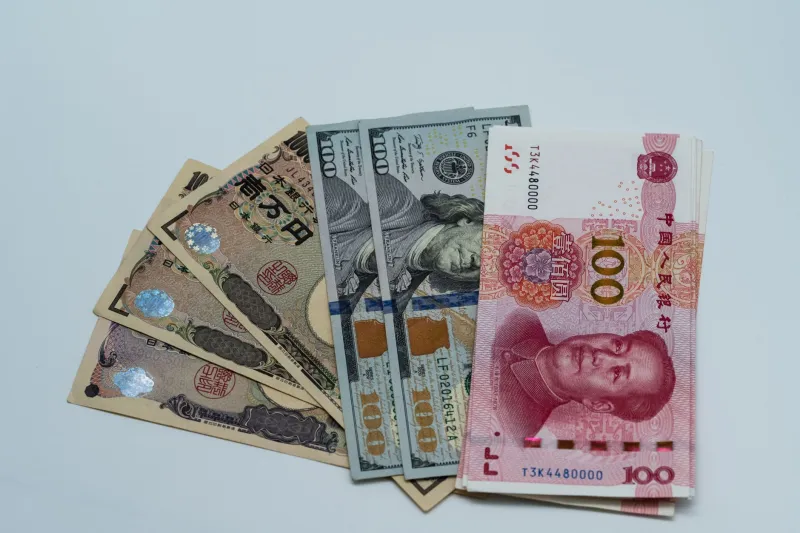
For decades, the US dollar has functioned as the invisible spine of global commerce — a financial instrument so dominant that Washington could impose its will on nations thousands of miles away without deploying a single soldier. That architecture is now under deliberate, coordinated assault. From Moscow to Beijing to Brasília, a growing coalition of governments is quietly engineering an exit from dollar dependency, and the consequences for American power may be more profound than most policymakers are willing to admit.
The Privilege That Built an Empire
To understand what is being dismantled, one must first appreciate what was built. When the Bretton Woods system collapsed in 1971 and President Nixon severed the dollar's link to gold, a new arrangement quietly took its place. The petrodollar system — anchored by a landmark 1974 agreement between Washington and Riyadh — ensured that global oil transactions would be denominated in US currency. The logic was elegant in its circularity: nations needed dollars to buy energy, so they stockpiled dollars, so they purchased US Treasury bonds, so Washington could finance its deficits at favorable rates. American economic supremacy was not merely a product of industrial might; it was structurally embedded in the plumbing of international trade.
That structural advantage translated directly into geopolitical leverage. Sanctions became Washington's weapon of choice precisely because exclusion from the dollar system could strangle an economy overnight. Iran, Venezuela, Russia — each experienced the suffocating effect of being cut off from dollar-denominated markets and the SWIFT interbank messaging network that underpins them. For years, the threat alone was sufficient to shape behavior.
The Fracture Lines Widen
The decision to freeze roughly $300 billion in Russian sovereign assets following Moscow's 2022 invasion of Ukraine marked a turning point that analysts are only beginning to fully reckon with. For governments that had long harbored quiet concerns about dollar dependency, the move was clarifying. If reserves accumulated over decades could be immobilized by a single political decision in Washington, the dollar's reputation as a neutral store of value was fundamentally compromised.
China drew its own conclusions rapidly. Beijing had already been constructing an alternative infrastructure for years — the Cross-Border Interbank Payment System (CIPS), a yuan-based rival to SWIFT, had been operational since 2015, processing an expanding volume of transactions. Chinese state energy companies accelerated negotiations to settle oil contracts in yuan, and in early 2023, Saudi Arabia publicly acknowledged it was open to trading crude in currencies other than the dollar — a statement that would have been almost unthinkable a decade prior.
Russia, facing the full force of Western financial exclusion, pivoted dramatically toward yuan-denominated trade with China. By mid-2023, the yuan had overtaken the dollar as the most traded currency on the Moscow Exchange — a symbolic inversion that carried genuine strategic weight.
BRICS and the Architecture of Alternatives
The BRICS bloc — Brazil, Russia, India, China, and South Africa — has become the institutional vessel for de-dollarization ambitions, though the coalition's internal coherence is frequently overstated by both its advocates and its critics. At the 2023 Johannesburg summit, the group announced a landmark expansion, extending membership invitations to Saudi Arabia, Iran, the United Arab Emirates, Ethiopia, Egypt, and Argentina. The inclusion of major energy producers was not incidental; it represented a deliberate attempt to construct a critical mass of nations capable of conducting commodity trade outside the dollar framework.
Discussions around a common BRICS currency have generated considerable media attention, but seasoned economists caution against conflating aspiration with operational reality. Creating a shared currency requires a degree of monetary policy coordination that the bloc's members — whose economic interests frequently diverge — have shown little genuine willingness to pursue. What is more immediately consequential is the quieter proliferation of bilateral currency swap agreements, which allow pairs of nations to conduct trade in their own currencies, bypassing the dollar entirely without requiring any centralized institutional architecture.
India, characteristically, is pursuing its own trajectory. New Delhi has negotiated rupee-based trade settlements with multiple partners and has been notably reluctant to subordinate its financial policy preferences to either Washington's or Beijing's agenda. India's posture illustrates a broader phenomenon: de-dollarization is not a monolithic movement with a unified command structure. It is a dispersed, often opportunistic set of national calculations converging on a shared outcome.
Washington's Complacency Problem
The American policy establishment has been slow to engage with the structural dimensions of this challenge. The standard reassurance — that no credible alternative to the dollar exists, that the euro, yuan, or any BRICS construct lacks the liquidity, legal infrastructure, and political trust required to displace it — contains genuine merit. The dollar still accounts for roughly 58 percent of global foreign exchange reserves, a figure that, while declining from its post-Cold War peak of nearly 71 percent, represents an enormous structural lead.
Yet the complacency embedded in that argument deserves scrutiny. The relevant question is not whether the dollar will be replaced overnight by a single rival currency — it almost certainly will not be. The more consequential question is whether Washington's capacity to weaponize dollar access will erode as an expanding share of global trade migrates to alternative settlement mechanisms. Sanctions derive their power from universality. A world in which a significant portion of commodity trade, particularly energy, can be conducted outside dollar channels is a world in which American financial coercion becomes a blunter instrument.
Some analysts within the US foreign policy community have begun articulating this concern with increasing urgency. Former Treasury officials have warned that overuse of sanctions — the very success of dollar weaponization — has accelerated the incentive for adversaries and nervous neutrals alike to seek exit routes.
The Road Ahead
The trajectory of de-dollarization is neither linear nor inevitable in its ultimate scope. Structural inertia, the absence of a genuinely liquid alternative, and the deep integration of dollar-denominated financial markets into the global system all represent meaningful friction. But friction is not permanence.
What is taking shape, with increasing clarity, is a bifurcating financial order — one in which a dollar-centric Western bloc coexists with an expanding parallel system serving a growing share of the non-Western world. For American citizens accustomed to the invisible subsidies that dollar primacy provides — lower borrowing costs, cheaper imports, the capacity to run persistent deficits without immediate market punishment — the long-term erosion of that privilege carries tangible domestic consequences.
The petrodollar was never simply an economic arrangement. It was a geopolitical instrument of the first order. Its gradual unwinding is, correspondingly, not merely a financial story. It is a story about the slow redistribution of global power — and Washington's willingness, or unwillingness, to confront that reality with the seriousness it demands.