Ground-Level Power: How China Turned the Periodic Table Into a Foreign Policy Weapon

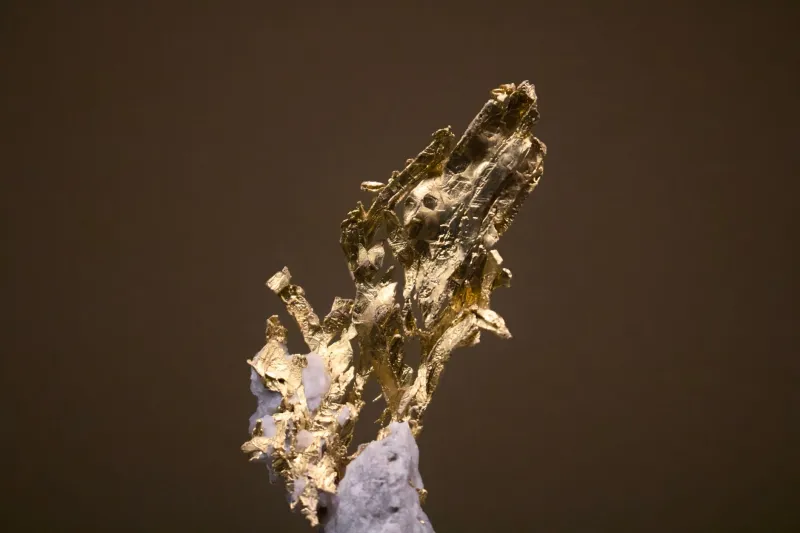
Photo: Wikideas1, CC0, via Wikimedia Commons
They do not explode. They do not launch from silos. They carry no warheads. And yet, seventeen metallic elements — names largely unfamiliar to the American public, like neodymium, dysprosium, and terbium — may represent a more durable threat to United States national security than any missile in Beijing's arsenal.
These are the rare earth elements, and China controls them with a precision that would impress any strategist. Not merely in terms of mining, but across the entire supply chain — from extraction to refining to the production of finished components that find their way into American defense systems, consumer electronics, and the renewable energy infrastructure Washington is betting its climate future upon.
The question that deserves serious scrutiny is not whether this dependency exists. It demonstrably does. The more urgent question is how Beijing engineered it so methodically — and why the United States allowed it to happen.
A Monopoly Decades in the Making
China's rare earth dominance was not accidental. It was the product of deliberate industrial policy stretching back to the 1980s, when Deng Xiaoping reportedly declared that while the Middle East had oil, China had rare earths. That statement, modest at the time, reads today as something closer to prophecy.
Over the following decades, Chinese state investment flooded into rare earth mining operations, particularly in Inner Mongolia, home to the Bayan Obo deposit — the largest known rare earth reserve on the planet. Simultaneously, Beijing cultivated domestic refining capacity at a scale no other nation could match or was willing to fund. Environmental regulations in the United States and elsewhere made domestic rare earth processing economically unattractive, a gap China exploited with ruthless efficiency.
By the early 2000s, China was producing approximately 90 percent of the world's rare earth supply. That figure has moderated slightly in recent years — closer to 60 to 70 percent of mining output — but China's share of global processing capacity remains near total. Even ore extracted in Australia, the United States, or Africa frequently travels to Chinese facilities for refinement before re-entering global supply chains. Controlling the refinery is, in many respects, more powerful than controlling the mine.
What Is Actually at Stake
For the average American, rare earths are invisible. They do not appear on grocery receipts or gas station signs. But their absence would be felt immediately and catastrophically across multiple sectors.
The United States military's most advanced platforms are deeply reliant on rare earth-derived components. The F-35 Joint Strike Fighter requires approximately 920 pounds of rare earth materials per aircraft. Virginia-class submarines, DDG-51 destroyers, and the Tomahawk cruise missile system all incorporate rare earth magnets and alloys that currently have no viable domestic substitute at scale. A sustained disruption to Chinese rare earth exports would not merely inconvenience the Pentagon — it would halt production lines.
Beyond defense, the civilian economy faces equivalent exposure. Electric vehicle motors depend on neodymium-iron-boron permanent magnets. Wind turbines require large quantities of dysprosium and terbium to maintain magnet performance at high temperatures. The semiconductor fabrication process, already a source of acute geopolitical anxiety, involves rare earth polishing compounds and specialized chemicals that originate overwhelmingly in China. Every pivot toward green energy and domestic chip manufacturing runs directly through Beijing's supply chain.
The 2010 Warning That Washington Ignored
The vulnerability was not a secret. In 2010, Beijing temporarily restricted rare earth exports to Japan following a maritime dispute in the East China Sea. Prices for some elements spiked by more than 2,000 percent within months. The episode sent a clear signal to every government paying attention: China was willing to weaponize its resource position in a geopolitical dispute.
Washington took note — briefly. The Obama administration filed a complaint with the World Trade Organization, which ruled against China's export restrictions in 2014. Beijing complied in form, adjusting its export quota system, but continued shaping the market through production caps, licensing controls, and state-directed consolidation of its rare earth industry into a small number of massive, government-aligned corporations.
Meanwhile, the one significant domestic competitor — Molycorp, the California-based operator of the Mountain Pass rare earth mine — declared bankruptcy in 2015, unable to compete with Chinese pricing. The mine was eventually acquired, restarted under new ownership as MP Materials, and has made progress in recent years. But processing capacity on American soil remains a fraction of what strategic self-sufficiency would require.
The Consolidation Strategy
In 2021, Beijing took its industrial policy a decisive step further. China formally merged its six largest state-owned rare earth producers into a single entity — China Rare Earth Group — creating a vertically integrated giant with direct government oversight and the scale to set global pricing terms. The consolidation was framed domestically as an efficiency measure. Strategically, it functions as a command-and-control mechanism over an asset that the United States has acknowledged, in its own National Defense Authorization Act language, as critical to military readiness.
The structure of this monopoly matters. It means that any American attempt to negotiate alternative supply arrangements, or to pressure Beijing through tariffs, risks a coordinated supply response that no single allied nation can absorb on short notice. Australia's Lynas Rare Earths and efforts in Canada, Greenland, and parts of Africa offer long-term diversification potential — but building the refining infrastructure to translate ore into usable materials takes years and billions of dollars.
The Political Economy of Inaction
Why has Washington moved so slowly? The answer involves a combination of market ideology, short-term corporate incentives, and the structural difficulty of sustaining industrial policy across changing administrations.
For decades, the prevailing consensus in American economic policymaking held that supply chains should be governed by comparative advantage — let the cheapest producer produce, and trust global markets to ensure availability. That consensus has fractured visibly since 2018, but its legacy persists in underfunded domestic programs and regulatory frameworks not designed for strategic resource competition.
The Defense Production Act has been invoked in recent years to accelerate domestic rare earth projects, and the Inflation Reduction Act included provisions intended to incentivize domestic critical mineral production. The Biden administration designated rare earth elements as critical minerals and allocated funding toward supply chain resilience. The Trump administration made similar declarations. Both have produced movement — but the gap between declared urgency and operational capacity remains wide.
A Leverage Point Beijing Has Not Fully Pulled — Yet
Chinese officials have signaled, with increasing frequency and decreasing subtlety, that rare earth exports represent a legitimate instrument of economic statecraft. During the height of US-China trade tensions in 2019, state media published commentary openly suggesting Beijing could cut off rare earth supplies to American defense contractors. The signal was deliberate, and it was received.
What prevents China from exercising this leverage more aggressively is, in part, economic self-interest — rare earth exports generate revenue and support employment in politically sensitive regions. But the calculus could shift. A crisis over Taiwan, a dramatic escalation in trade conflict, or a broader decoupling dynamic could alter Beijing's cost-benefit analysis in ways that current American contingency planning may not adequately anticipate.
The United States has spent decades building military and economic power on a foundation that includes materials it cannot, at present, secure without Chinese cooperation. That is not a trade relationship. It is a vulnerability — one that was engineered deliberately, allowed to deepen through neglect, and has not yet been fully reckoned with.
The periodic table, it turns out, has geopolitical borders. And on the elements that matter most, those borders run through Beijing.