Beyond the Obvious: Five Overlooked Pressure Points Where American Wars Could Begin
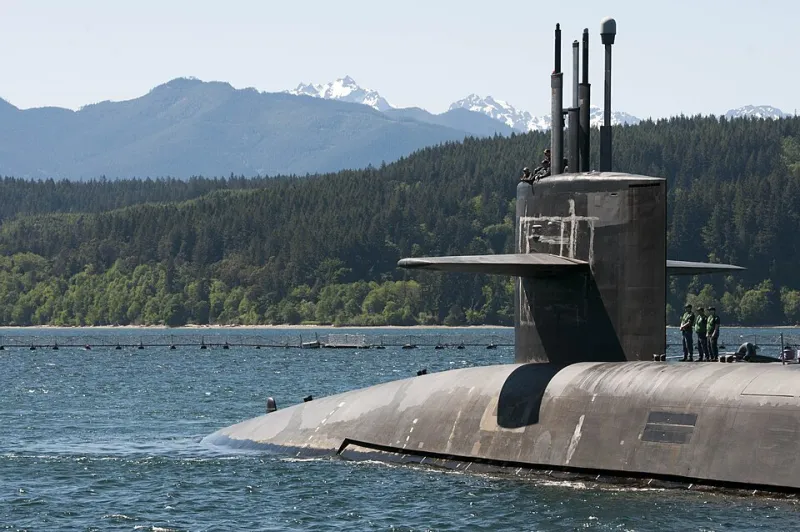
Photo: Official U.S. Navy Page from United States of America Lt. Cmdr. Michael Smith/U.S. Navy, Public domain, via Wikimedia Commons
Ask most Americans where the next war might start and you'll hear two answers: Taiwan and Ukraine. Both are legitimate concerns. Neither tells the whole story.
American military entanglements have a way of beginning in places that weren't on anyone's radar—a Gulf of Tonkin incident, a Sarajevo assassination, a border post nobody could find on a map. Here are five overlooked pressure points where a spark could, under the right conditions, drag the United States into a confrontation it didn't choose.
1. The Second-Tier Reefs of the South China Sea
Everyone watches Taiwan. Fewer people watch Second Thomas Shoal—a rusting Filipino transport ship, grounded in 1999 with a small garrison aboard, that China's coast guard has spent years trying to starve out. Filipino resupply missions now routinely collide with Chinese vessels, and water cannons have given way to more aggressive tactics.
Why it matters: the United States has a mutual defense treaty with Manila. If a Filipino sailor dies in one of these encounters, Washington faces a treaty obligation in waters 7,000 miles from California. The scenario is simple: one rammed boat, one death, one alliance commitment.
2. The Arctic
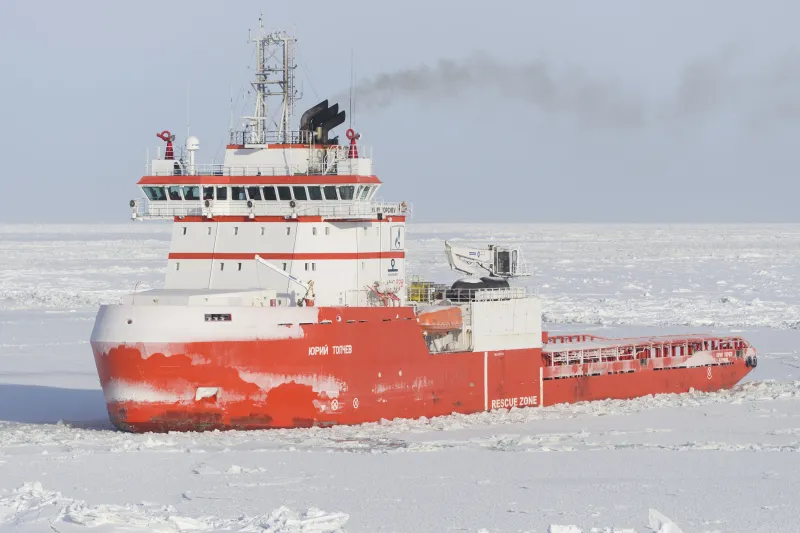
As the ice retreats, the top of the world is becoming a militarized zone. Russia has reopened Cold War bases; NATO has added Finland and Sweden; American bombers routinely train over Norwegian airspace.
The danger here is not intent but accident. Submarines prowl the same waters, communications are degraded, and search-and-rescue infrastructure is thin. A collision under the ice—an echo of Cold War near-misses—could escalate before either capital fully understands what happened.
3. The Balkans, Again
Three decades after Dayton, Bosnia remains a powder keg. Serb separatist leader Milorad Dodik has openly campaigned to pull Republika Srpska out of Bosnia's state institutions, and ethnic tensions in Kosovo periodically flare into violence.
The United States led the NATO intervention in 1995 and the bombing campaign in 1999. American peacekeepers served there for years. If Bosnia fractures again, the question for Washington won't be whether to get involved, but how quickly—and how Russia, which backs Belgrade, responds.
4. The Kashmir Line of Control
India and Pakistan, both nuclear-armed, have fought multiple wars over Kashmir and still exchange artillery fire across the de facto border. In 2019, an Indian airstrike on Pakistani territory brought the rivals closer to open war than at any point in decades.
Direct American involvement is less likely here—but a serious Indo-Pakistani war would trigger evacuation operations, pressure on Washington to pick a side, and a nuclear threshold the world has never crossed. In a crisis, the United States rarely gets to stay neutral.
5. The Strait of Hormuz—Now Digital
Tehran has threatened to close the Strait of Hormuz for decades, and the world's oil market has learned to live with the rhetoric. What's changed is the method: rather than mining the shipping lane, Iran can now attack the systems that run it. GPS jamming, shipping-tracking spoofing, and cyberattacks on port logistics have all been observed in the region.
A cyberattack that disables navigation for tankers—blamed on Iran, denied by Iran—could produce a naval response from the United States almost overnight. Fifth Fleet headquarters sits in Bahrain, minutes from the action, with no luxury of deliberation.
The Pattern Worth Noticing
None of these flashpoints resembles a classic invasion. They are gray-zone confrontations: coast guard rammings, cyber intrusions, separatist referendums. That's precisely what makes them dangerous—each one is small enough to dismiss until it isn't. The next American war, if it comes, will probably not announce itself in advance. It will look, for a while, like nothing at all.